


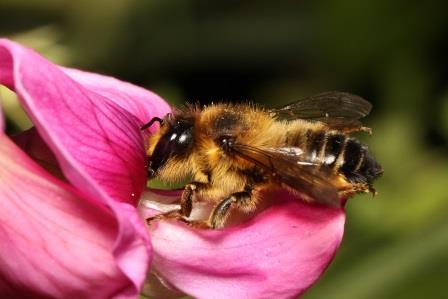
One of the best things about gardening with annuals to attract pollinators is that, since you are replanting each season anyway, you can change your theme and colour scheme every year. Get creative, try new plant combinations, and over time you’ll learn which annuals both you and the winged critters love the best.
The annuals listed below are excellent for attracting bees, butterflies, hoverflies and other beneficial pollinators while giving strong colour through winter and spring.
 Bokbaai Vygie Bokbaai Vygie (Dorotheanthus bellidiformis)
Bokbaai vygies are grown for their multitude of silky-textured flowers in a dazzling range of colours like yellow, cream, pink, lavender, magenta, and orange. They can be used just about anywhere you have full sun in the winter garden. Their attractive succulent foliage is wonderful in rock gardens, cascading over a wall, draping from a mixed container planting, or carpeting a garden bed. They are particularly beautiful if sown in large drifts.
This water-wise, indigenous South African annual blooms prolifically in spring, and its vibrant, sun-reflecting blooms act as a highly visible magnet that draws in wild bees, honeybees, butterflies, and many other pollinators, providing a rich source of both nectar and pollen. The bees gather nectar to make honey (carbohydrates), and pollen for the essential proteins, fats, and vitamins required to sustain their hives.
Because Bokbaai vygies are native to sunny, dry environments, their radiant, daisy-like flowers only open fully on warm, sunny days when pollinators are most active. Bees rely heavily on scent and flower colours and patterns, and the bright colours of Bokbaai vygies and the symmetrical shape of their flowers act as clear "landing pads" that guide bees directly to the food source. When planted together in large drifts or "bee carpets," they create a massive block of colour and scent that makes it highly efficient for bees to harvest without wasting energy flying between distant patches of flowers.
Members can click here to read more about growing Bokbaai vygies
 Namaqualand DaisyNamaqualand Daisies, African Daisy (Dimorphotheca)
Namaqualand daisies grow naturally in the winter-rainfall regions of South Africa, and are renowned worldwide for the spectacular show they put on in Namaqualand after good winter rains. They also adorn many gardens at this time, and remain a favourite for gardeners because they are economical, water-wise, and easy to grow from seed sown directly into garden beds. An added bonus is that at the end of the growing season you can collect seeds to sow next season, so you only have to buy them once. Namaqualand Daisies come in the traditional bright orange and yellow, as well as pastel shades like salmon, cream and pure white. They require as much sunlight as you can provide as the flowers only open in the sun and will remain closed on overcast days.
Namaqualand daisies are used as a low cover around shrubs in hot, sunny beds, or as the focal point in mass plantings. They make cheerful fillers amongst dormant roses, and pretty borders, so sow them in mass into large beds, rockeries or borders for hassle-free winter and spring colour. These daisies will attract many pollinators, including butterflies and bees to the garden, providing a vital food resource at a time of year when nectar is scarce, so even if you have a small garden, sow a small packet this autumn and you will find yourself adding these lovely flowers to your garden each year.
When grown in drifts or meadows, their vibrant colours and light fragrance create strong visual cues that attract pollinators from long distances.Their wide, open petals act as natural ‘landing pads’, so a wide variety of bees—from solitary bees to honeybees—can easily forage without struggling. Their bright, serrated centres are loaded with protein-packed pollen and nectar, providing bees with the fats, proteins, and carbohydrates they need to feed their developing larvae and sustain hive health.
Members can click here to read more about growing Namaqualand daisies
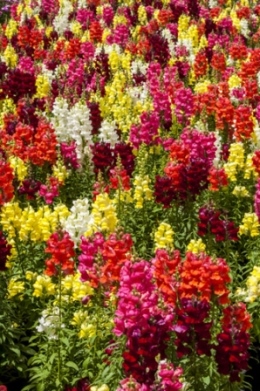 SnapdragonsSnapdragon (Antirrhinum majus)
Snapdragons never go out of fashion, and in season you will always find packets of seeds or trays of seedlings alongside other annuals because they are so reliable and easy to grow, bringing great pleasure to gardeners worldwide. Snapdragons are available in dwarf and tall strains, and the flowers come in almost every colour or bicolour, including red, bronze, yellow, orange, pink, purple, cream, and white. Be sure to select colours that go with your interior colours, as snaps are fantastic cut flowers. Their vast colour palette allows you to mix them effortlessly with other flowering annuals for a long-lasting effect, so include snapdragons in mixed plantings, in window boxes, hanging baskets, and containers of all sizes.
Snapdragons have highly visible coloured patterns like contrasting yellow or magenta centres that act like "landing strips" to guide bees. On sunny afternoons, the plant releases a stronger fragrance, which attracts foraging bees and clings to them so hive-mates can track the scent back to the blooms. Research has shown that snapdragons can literally ‘hear’ the buzz of approaching, friendly pollinators, and when they detect the vibrations of a helpful bee the plants sweeten their nectar to reward their favourite visitors. Once inside, the bee is rewarded with highly nutritious pollen and sweet nectar. As the bee forces its way in and out, the flower's pollen dusting mechanism coats the insect's body, ensuring the pollen gets transported to the next flower.
The relationship between snapdragons and pollinators involves some incredibly clever evolutionary traits. Snapdragons support bees and pollinators by utilizing a specialized, closed-mouth floral structure that specifically targets larger, heavy insects like bumblebees. The flower's petals are fused to create a closed, two-lipped ‘jaw’ which is activated by weight, so a bee must land on and physically pry open the bottom lip to crawl inside. Because snapdragons demand a specific weight to open, this clever design prevents lighter, inefficient insects from stealing nectar and plays a crucial ecological role in sustaining larger, more robust pollinators like bumblebees, which are essential for many agricultural crops. The flower petals are also covered in microscopic, cone-shaped cells that act like tiny ‘non-slip mats’. This textured surface provides bees with the traction they need to grip the flower and force it open.
Members can click here to read more about growing Snapdragons
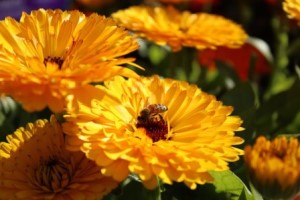 Calendula Pot Marigold (Calendula officinalis)
Calendula is a satisfying choice for novice gardeners and children because it rewards quickly with generous crops of showy flowers. It is a fast growing winter and spring flowering annual that is easy to germinate and simple to care for, producing large, single or double flowers that last long in a vase. The clear, bright colours are orange to apricot-orange and golden to lemon-yellow. Calendula perform best when sown directly into garden beds, and the seed is very inexpensive, making it a most economical winter crop to sow. And, because the mature seed is quite large, it can easily be collected and saved for next season.
An added bonus is that calendula will grow happily in full sun or light shade, making it super versatile in the garden, and especially good for those garden beds where the sun pattern changes from full sun to semi-shade during the day. Sown in massed beds or as an edging plant alongside walkways, calendulas can put on quite a show. They also complement other winter flowering annuals if planted into window boxes, hanging baskets and pots, providing many weeks of warm winter colour. Their bright, open daisy-like blooms attract a variety of beneficial insects like honeybees, bumblebees, butterflies, and hoverflies, which all help pollinate surrounding garden crops. Calendula is also a renowned ‘companion plant’ for other garden plants, helping to keep those growing nearby healthy, so sow them between your winter vegetable crops for a healthier and very pretty winter veggie patch.
Calendula blooms profusely for a long period, filling critical food gaps for pollinators early and late in the season. The flat, open shape of the daisy-like flower heads makes it incredibly easy for various bee species and other pollinators to land on and access the pollen and nectar without having to navigate complicated petal structures. Therefore calendulas support bees and pollinators by providing an easily accessible, steady supply of nectar which offers the carbohydrates required for flight energy, and pollen which provides bees with necessary proteins and fats, throughout a long flowering season.
Members can click here to read more about growing Calendula
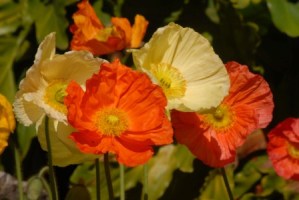 Iceland Poppy Iceland Poppy (Papaver nudicaule)
Iceland poppies are available in bright and pastel shades of red, pink, yellow, orange, cream and white, as well as bicoloured varieties. There are several varieties like ‘Champagne Bubbles’ which are available in mixed and single colours. Poppies are sought after cut flowers and the more you pick them, the more they bloom! May is the perfect time to plant Iceland Poppy seedlings in South Africa. They love full sun and well-prepared beds. Iceland poppies will flower all winter and spring if you nip out very first flowers and continually deadhead thereafter; removing the spent flowers by cutting them off at the base of the plant.
Iceland poppies attract bees, butterflies and other pollinators to the garden and combine beautifully with most winter flowering annuals, and make a fantastic backdrop for spring flowering bulbs. Try planting them in drifts, inter-planted with pansies or violas in complimentary or contrasting colours for a brilliant display. They are wonderful in meadow and cottage gardens and also grow well in containers with other annuals.
The bright, vibrant petals of Iceland poppies are highly attractive to pollinators, drawing them into the garden where they can pollinate surrounding plants and crops. Because they bloom from winter through spring, they provide much-needed early spring food source for emerging queen bumblebees and active honey bees at times when other forage is scarce. While Iceland poppies do not produce nectar, their flowers offer massive amounts of protein-rich pollen. Because their open, bowl-like blooms expose their stamens, bees can easily forage, roll around, and gather pollen to feed their colonies and larvae, without expending too much energy. This makes them a great resource for native solitary bees and honey bees looking to pack their ‘pollen baskets’.
Members can click here to read more about growing Iceland Poppies
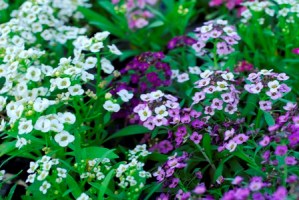 AlyssumAlyssum (Lobularia maritime)
Alyssum is a compact, low-growing plant that remains one of the most popular bedding plants because it is low maintenance, long flowering and very easy to grow all year round in full sun or light shade. Its honey scented flower spikes are available in lovely in shades of pink, rose, purple, mauve, white and yellow. Alyssum makes a wonderful carpet-like ground cover, so you can use it as an edging plant in the garden, or to fill nooks and crannies on walkways and walls. The tight, free-flowering plants also mix effortlessly with other flowering plants in all manner of containers for months of colour. Inter planting alyssum around your vegetables and fruit trees, brings pollinators directly to the area, which significantly improves yields. Along with many other pollinators, the flowers attract hoverflies, lacewings, and parasitic wasps. These predatory insects feed on common garden pests like aphids and caterpillars, creating a healthy, pesticide-free ecosystem.
Because alyssum blooms profusely for months, and in mild climates can bloom almost all year, it offers a reliable and long-lasting supply of nectar and pollen. Its delicate honey-like aroma is highly fragrant to pollinators, traveling long distances to attract bees, butterflies, and even hoverflies into your garden. The plant's exceptionally small flowers have short, shallow nectaries (a specialized plant gland that secretes nectar). This makes them highly accessible to smaller bee species, solitary bees, and beneficial predatory insects that struggle to feed from larger, tubular flowers.
Members can click here to read more about growing Alyssum
 LobeliaLobelia (Lobelia erinus)
This little annual herb, or short-lived perennial, forms dense mounds smothered with small flowers. Some varieties have bronzy foliage and others sport bright green leaves. The cascading varieties produce billowing masses of flowers up to 30cm long and are favourites to mix with other plants in hanging baskets and containers. The wild form is known for its beautiful sky-blue and white flowers, but breeders have been hard at work on this little beauty and today gardeners are spoilt with flowers that often feature a tiny white ‘eye’ in each bloom and come in various shades of blue, purple, lilac, pink, and pure white. Lobelia is a popular choice for gardeners due to its variety of uses. This reliable little plant can be tucked into just about any plant combination, to fill in the gaps in garden beds or pots, or to add a bit of trailing interest. Lobelia makes an excellent edging plant for flower beds, and is excellent for boggy areas or near water features. It is especially lovely in hanging baskets and window boxes, planted with other flowering and trailing plants.
Lobelias are good in wildlife gardens as the tubular shape of the flowers and their vibrant colours, especially the bright blues and purples, are highly attractive to pollinators, including a variety of bees and butterflies. Lobelia flowers supply high-quality, carbohydrate-heavy nectar deep inside their tubular structures, which serves as a vital energy source. Their long blooming season also supplies valuable pollen for bees. Pollination is fascinating as the flowers have fused anthers that form a tube, and when a bee pushes its head into the flower, it triggers a ‘pump mechanism’ that releases and dusts pollen directly onto the insect's head and thorax. The tubular shape of the flowers accommodates bumblebees and long-tongued bees perfectly. This steady food supply directly powers the daily flight and foraging requirements of local insect populations.
Members can click here to read more about growing Lobelia
 Nemesia Nemesia, Cape Jewels (Nemesia strumosa)
Nemesias are one of those endearing little South African annuals that never fail to delight gardeners, and they have been in cultivation for a long time. All nemesias are amazing landscaping species for gardens small or large, and can be just as pretty planted in pots and hanging baskets as they are as an edging plant in mixed borders, or as fillers between other larger plants and shrubs. Plant drifts of these delightful little annuals, and you will never be able to imagine your garden without them again.
Incorporating these versatile, low-maintenance plants in garden beds, balcony containers, or hanging baskets creates vital feeding zones that support local ecosystems by providing a vital, easily accessible source of nectar and pollen in winter and spring when other flowers are scarce. Nemesia flowers are highly fragrant, and because bees use scent to locate food from afar, this sweet aroma acts as a powerful homing beacon, drawing them straight to the flowers. While scent draws them in from a distance, bees also rely on colour when they get closer, and because nemesias come in brilliant shades of yellow, purple, blue, white, and pink, the provide highly visible visual cues for bees to target. The nectar offers the high sugar content bees need for energy to sustain their foraging flights, and the flowers' unique tubular, pouch-like, or two-lipped structure makes the nectar and protein-rich pollen easily accessible to a variety of bee species.
Members can click here to read more about growing Nemesia
 primulamalaciodesPrimula malacoides (Fairy Primrose)
Scatter some fairy magic throughout your garden by tucking fairy primroses into areas of the garden which receive semi-shade to sun. The flowers come in delightful shades of lilac, purple, pink, carmine-red and white, and gardeners love to use them in flower and bulb borders. You can even create your own meadow garden by planting them between ornamental grass-like plants, and if space is limited, include them with other winter and spring flowering plants in pots, window boxes, and hanging baskets, where fairy primulas will add vertical accent to the arrangement.
While Primula malacoides varieties are great for attracting pollinators to your garden, some highly hybridized, vividly coloured purple, pink and carmine-red ornamental primulas sold in nurseries have been bred in ways that reduce their nectar value, so when planting for pollinators select the pale lilac ones. They support bees and pollinators primarily by providing source of pollen and nectar during winter and spring when they provide a much-needed, easily accessible food source for emerging pollinators when other forage is scarce. The flowers yield both pollen, which provides protein, and nectar which provides carbohydrates and energy for foraging bees. Insects emerging from hibernation on mild days, like queen bumblebees, are seeking early sustenance and rely on these early blooms.
Members can click here to read more about growing Fairy Primrose
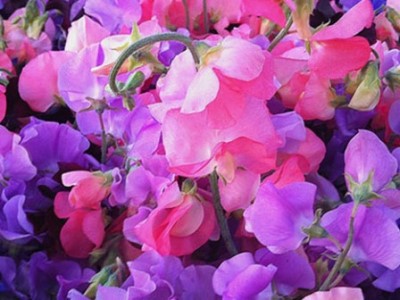 Sweet PeasSweet Pea (Lathyrus odoratus)
Sweet peas are lovely cut flowers, spreading their heady scent throughout the garden and home, and the more you pick them, the more they bloom. They are available in almost every conceivable colour, except for yellow, and are so easy to grow they are suitable for children’s gardens. All they need to flourish is full sun, rich soil, and regular feeding and watering. It’s no wonder people have been romancing the sweet pea for hundreds of years. Sweet peas are available as climbers which can be grown anywhere they have some support, knee-high’s are great in the middle of a winter and spring flower border, and dwarf varieties are great border plants and fabulous in pots, window boxes and hanging baskets, so there’s no excuse not to have some sweet peas, even in the smallest of gardens. Planting sweet peas on trellises, fences, or near vegetable gardens naturally draws bees to your yard. Once the bees are there, they will naturally cross-pollinate your other flowering crops
Sweet peas support bees and pollinators by providing a vital early-season source of pollen and nectar, and according to horticultural experts, incorporating sweet peas bolsters local biodiversity and creates a much healthier, bustling garden ecosystem. The vibrant colours and strong, sweet scent of sweet peas makes them highly visible and attractive to passing pollinators. The sugary nectar at the base of their petals fuels foraging bees and butterflies as they move from bloom to bloom, and the flowers are an excellent source of protein-rich pollen, which bees collect to feed their developing larvae and sustain the hive. Research confirms that sweet peas are specialized for bee pollination, evolving distinct floral shapes known as ‘pea-like’ or ‘papilionaceous’ flowers. Papilionaceous flowers are distinctly butterfly-shaped, irregular blossoms, characteristic of the pea and bean family. They feature five unequal petals structured to shelter reproductive organs and attract specific pollinators like bees. The flowers require a bee's weight and foraging behaviour to properly access the pollen and trigger natural pollination.
Members can click here to read more about growing Sweet Peas